
Water damage is one of the most common and disruptive property emergencies that homeowners and business owners face. In Indio, California, the combination of desert heat, aging plumbing infrastructure, and occasional severe weather events creates a range of conditions that can lead to significant water intrusion. Understanding the Water Damage Restoration Indigo process what happens, in what order, and why helps property owners respond effectively when an incident occurs.
What Causes Water Damage in Indio Properties?
Water damage doesn’t require a major flood to be serious. In the Coachella Valley, some of the most frequent causes of residential and commercial water damage include burst or leaking pipes, particularly in older homes where plumbing has deteriorated over time. Water heaters, washing machines, and dishwashers are also common culprits, as their connections and hoses are subject to wear and can fail without warning.
Roof leaks during seasonal rainstorms, plumbing fixture failures, and HVAC condensation issues round out the typical causes. In commercial settings, sprinkler system malfunctions and sewer backups add to the list. Each of these sources introduces water into areas of the building that are not designed to handle moisture leading to rapid structural and material damage if not addressed promptly.
Why Immediate Response Is Critical
Water damage worsens with time. Within minutes of a water intrusion event, water begins migrating into walls, flooring, and subfloor materials through capillary action. Within hours, drywall becomes saturated and begins to weaken; wooden framing absorbs moisture and can begin to swell or warp. Within 24 to 48 hours, conditions become favorable for mold growth, a secondary problem that significantly complicates restoration and poses health risks.
The relationship between response time and restoration outcome is direct: faster response means less material loss, lower restoration complexity, and reduced overall damage. This is why professional restoration services in Indio operate with emergency response protocols, often guaranteeing on-site response within a matter of hours.
The Water Damage Restoration Process: Step by Step
Professional water damage restoration follows a structured process defined by industry standards, particularly those established by the IICRC (Institute of Inspection Cleaning and Restoration Certification). The process begins with a thorough inspection and damage assessment. Technicians use moisture meters, thermal imaging cameras, and hygrometers to map the extent of water intrusion including moisture hidden behind walls or beneath flooring that is not visible to the naked eye.
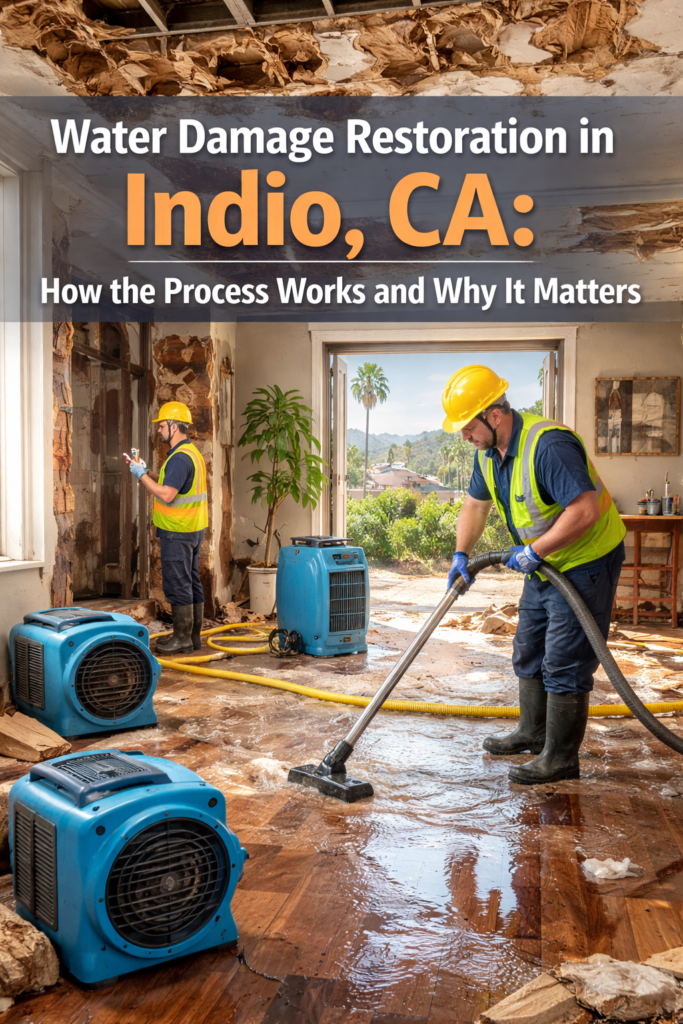
Water extraction is the next critical step. Industrial-grade pumps and wet vacuums remove standing water quickly and efficiently. Following extraction, structural drying begins using high-capacity air movers and dehumidifiers positioned strategically throughout the affected area. This phase typically takes several days and is monitored continuously to ensure moisture levels are returning to acceptable ranges.
Once the structure is dry, the restoration phase begins. Damaged materials saturated drywall, flooring, insulation are removed and replaced. Antimicrobial treatments are applied to prevent secondary mold growth. The space is then rebuilt to its pre-damage condition, restoring both function and appearance.
Understanding Water Damage Categories
Not all water damage is equal. Restoration professionals classify water damage by category based on the contamination level of the water involved. Category 1 water, called clean water, comes from sanitary sources such as broken supply lines or overflow from clean appliances. Category 2 water, or gray water, contains some contamination from dishwasher overflow or washing machine discharge, for example and requires more careful handling.
Category 3 water, known as black water, is severely contaminated and includes sewage backups and floodwater from storms. This type of water damage requires specialized protective equipment, more aggressive antimicrobial treatment, and the removal of all porous materials that have been affected. Understanding these categories helps explain why the restoration approach and the scope of work varies considerably from one incident to the next.
Protecting Your Indio Property from Water Damage
While water damage cannot always be predicted, property owners can take steps to reduce risk. Regular inspection of plumbing, appliance connections, roof flashing, and drainage systems catches potential problems before they become emergencies. Installing leak detection devices near water heaters and washing machines provides early warning. Ensuring proper grading and drainage around the foundation prevents water from pooling against the building during rainstorms.
In Indio’s desert environment, where heavy rain events are infrequent but can be intense, adequate roof and drainage maintenance is particularly important. When water damage does occur, knowing the restoration process and responding without delay is the most effective way to minimize its impact.